
Good Care, Bad Care, & The Advocating Parents
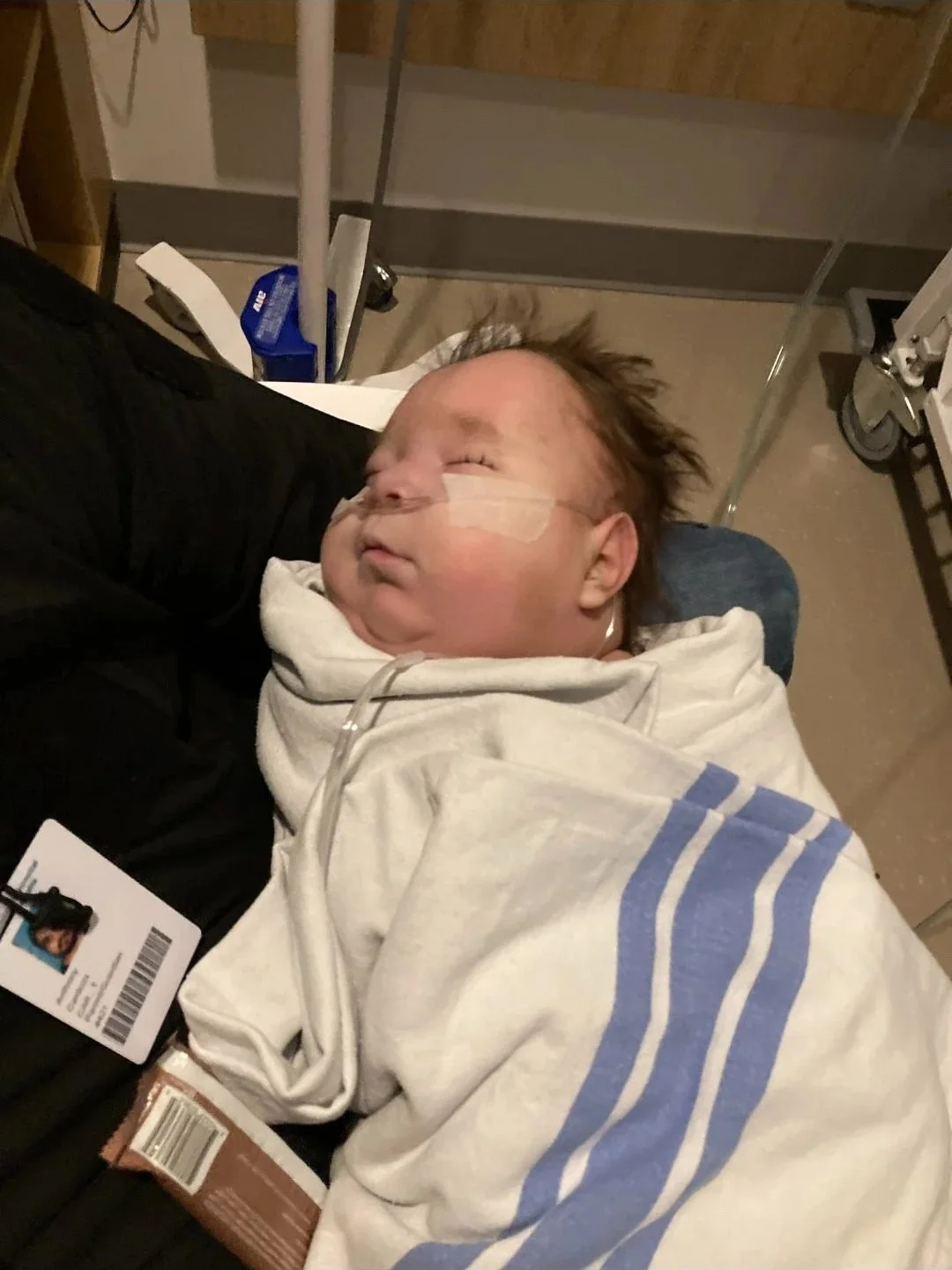
Two years ago today, we saw firsthand the challenges that many children with life-limiting disorders often face. Teddy was only 6 months old when he went in for a fairly minor ENT procedure (a bronchoscopy) to get a closer look at his known airway obstruction. He had to be taken off his blood thinners for a few days beforehand. Those blood thinners were extremely important for keeping open the PDA stent he had, which provided the only path for him to receive oxygenated blood due to the way his heart was structured (he had RV-to-aorta with pulmonary atresia and VSD).
The bronchoscopy revealed moderate to severe tracheomalacia. We already knew he had an airway obstruction since birth. We just didn’t know its exact location or severity. We were relieved when the procedure was done quickly and without any issues. He didn’t even need the supraglottoplasty or trimming of airway tissue that we had expected might be necessary.
Teddy was taken to recovery. My husband went home to be with our daughter since everything had gone well. As Teddy began waking up, his oxygen saturation started to drop fairly quickly. The medical team said everything was fine. I immediately expressed concern that his PDA stent might be closing due to being off his blood thinners for so long. They dismissed my concerns.
“He has trisomy 13 & severe tracheomalacia! This is to be expected,” they said. I emphasized that he had always had that. Just because the airway obstruction was only officially diagnosed today didn’t mean it had just acutely developed. We knew he had an obstruction since birth. Why would it suddenly be causing desaturation now? Something was wrong, and I repeated this over and over to every nurse and doctor that came in. It seemed to clearly be cardiac-related, but no one took my concerns seriously. I was also told many times that the trisomy 13 was to blame, but trisomy 13 is merely a genetic condition that does not inherently cause desaturations on its own.
This went on all evening. They tried high-flow oxygen, CPAP - everything they could think of, to no avail. He only got worse. That night, they transferred us to the PICU. Those doctors were even worse. They assumed nothing could be done because of his “fatal” diagnosis of trisomy 13 and the new airway findings. They finally decided to intubate him early in the morning and informed me it was their “last attempt to save him.”
When intubation didn’t help his oxygen levels, I was yelling at everyone who would listen that this was clearly not an airway issue and that he needed a cardiologist immediately. They finally called in a cardiologist. She took one listen and immediately knew the problem: “I can’t hear the murmur from his stent. It’s closing up or may already be closed.”
Exactly what I had suspected more than 12 hours earlier, but no one would listen. And now, it might have been too late. If the stent had fully closed, it would have been significantly more dangerous and difficult to reopen it, and every second was crucial. We wound up in this very critical moment all because no one wanted to listen to his mom’s instincts about what was going on hours earlier.
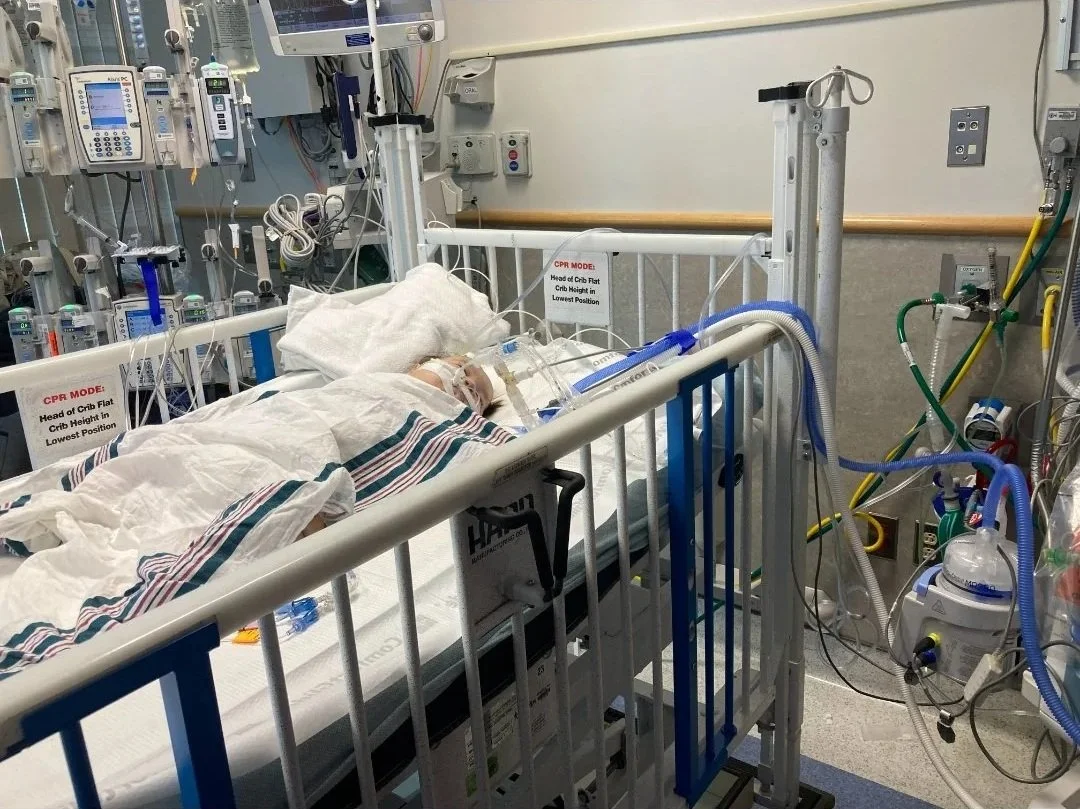
I was beside myself. I called my husband as he was on his way to work and told him to turn around and come to the hospital right away. We didn’t know what was going to happen next.
They called in the on-call interventional cardiologist and had to do a very risky, stat procedure. Last time, they had prepared Teddy and done imaging to see exactly what he needed - but there was no time for that now. I shouted, “I love you, Teddy,” as they rolled him away for what I knew could have been the last time, hoping somehow he could hear me even while sedated.
It was the longest hour of our lives as I waited alone - waited for my husband to arrive, waited for any word from the cardiac team, waited to know if our boy was still even alive. By God’s grace, the nurse eventually came out to tell us they had been able to place a new stent and would be finishing soon. The surgeon came out shortly after to explain that the original stent was significantly narrowed but that they had successfully placed a new one, effectively saving him. We had never felt so relieved.
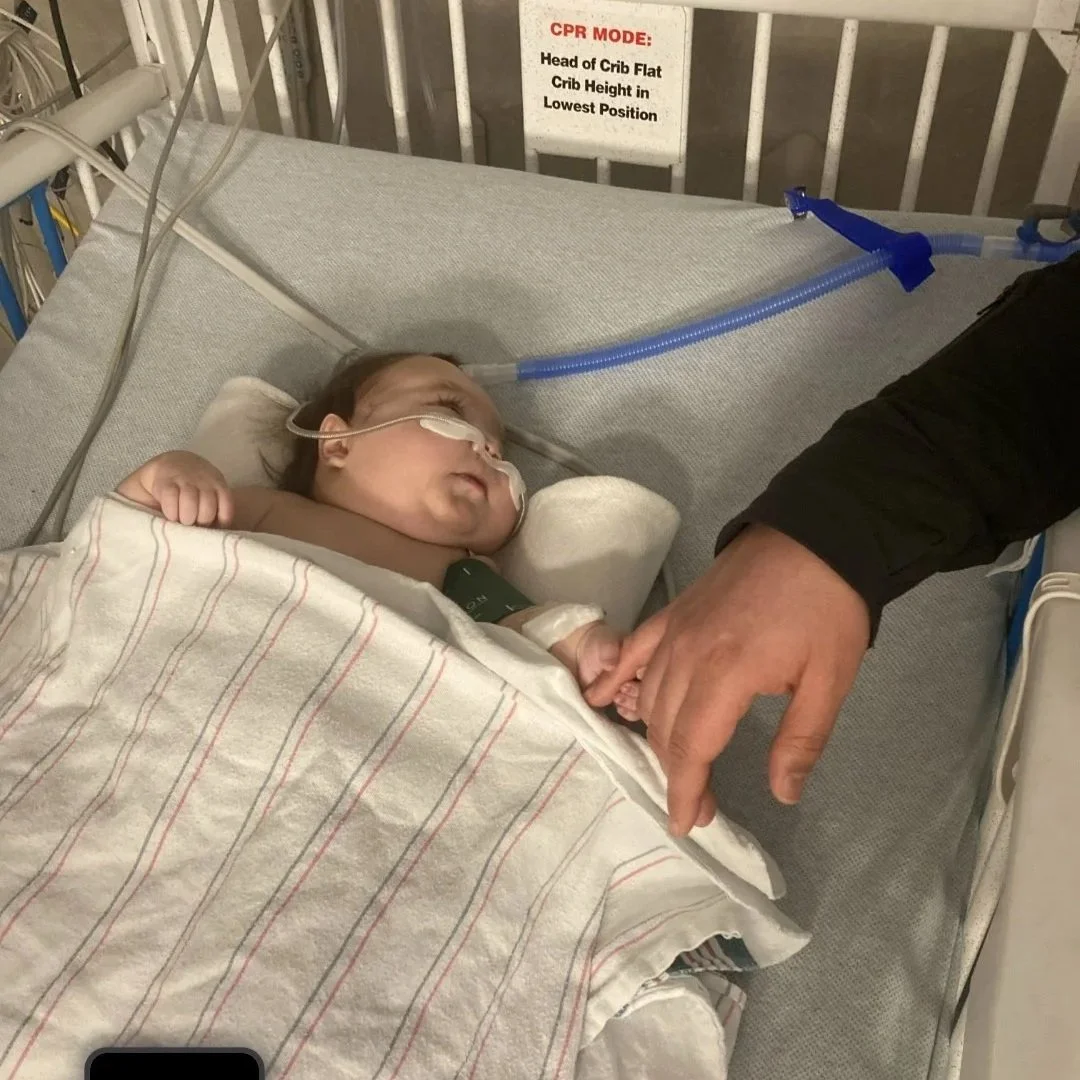
We knew it wasn’t a permanent fix and that it was only a matter of time before further interventions would be needed for his heart. But this gave us more time. We were blessed with 5 more incredible, love-filled months with Teddy after that. It may not seem like a long time to most people, but for us, those five months were a lifetime more of laughs, snuggles, smiles, kisses, and memories that we almost lost due to medical negligence.
I’ll never forget the anger and fear I felt over those 24 hours as the medical team brushed off all my concerns and refused to think critically about a solution. This was just one of many times that Teddy was treated differently because of his diagnosis.
I don’t share this to bash the medical team, but to encourage everyone reading this. To encourage parents to advocate fiercely. Of course, the medical team often knows best and should not be treated as if they know less than you. But sometimes, a parent’s instincts are right. And sometimes, you’ll have to fight for your child to get treated fairly. If your child is being treated differently because of their diagnosis, and you know something isn’t right, don’t back down.
And to those in the medical field: I get it. Your schooling and experience are invaluable, and patients often don’t respect your expertise, or they think they know better because of their self-taught Google-searching skills. I know firsthand how frustrating that can be from my own work in the medical field. But please, don’t disregard parents’ instincts so easily, and always push yourself to think critically.
Just because one answer seems most likely, doesn’t mean it’s the only answer. Don’t be too proud to consider other options, especially when your solution isn’t working. Always be ready to keep learning and listening.
It was one great cardiologist who saved Teddy that day by noticing the diminished murmur. It was one (fairly young) interventional cardiologist who was on call and acted quickly to fix Teddy’s stent when every second counted. We owe nearly half of Teddy’s lifespan to a couple of great doctors, and we almost lost half of his lifetime because of a handful of negligent ones. We truly appreciate all the medical professionals who take time to listen and understand parent concerns, and we encourage any medical workers reading this to be the ones who listen and think beyond a diagnosis. And to fellow parents - know that you are not alone. We are here to help support all parents with resources and encouragement as you advocate for your children. ❤️